A green coffee offer can look simple: origin, price, volume. But two offers with the same price can describe very different coffees. Here is what to look at before you ask for a sample.
Brazil is not one flavour. Cerrado Mineiro, Sul de Minas, Mogiana and Espírito Santo produce different profiles. Ask for the region, and where possible the farm or cooperative.
Natural (dried in the cherry), pulped natural or washed. Most Brazilian arabica is natural or pulped natural, which gives body and sweetness.
Screen 17/18 is the usual reference for larger beans. Ask for the percentage retained on each screen, not only the top size.
Brazilian coffee is classified by defects per sample, with a type number (for example NY 2/3). Ask for the defect count, and for moisture, which should be stable for safe shipping.
Ask for the cup score and notes. Specialty coffee is usually defined as 80 points or more on the SCA scale, and a cupping report should come from a qualified Q Grader.
Distinguish the offer sample, the pre-shipment sample and the arrival sample. The contract should say which one is approved for shipment.
FOB Santos, CFR or CIF, in cents per pound or USD per bag, for the month of shipment. Confirm the volume tolerance and the payment terms.
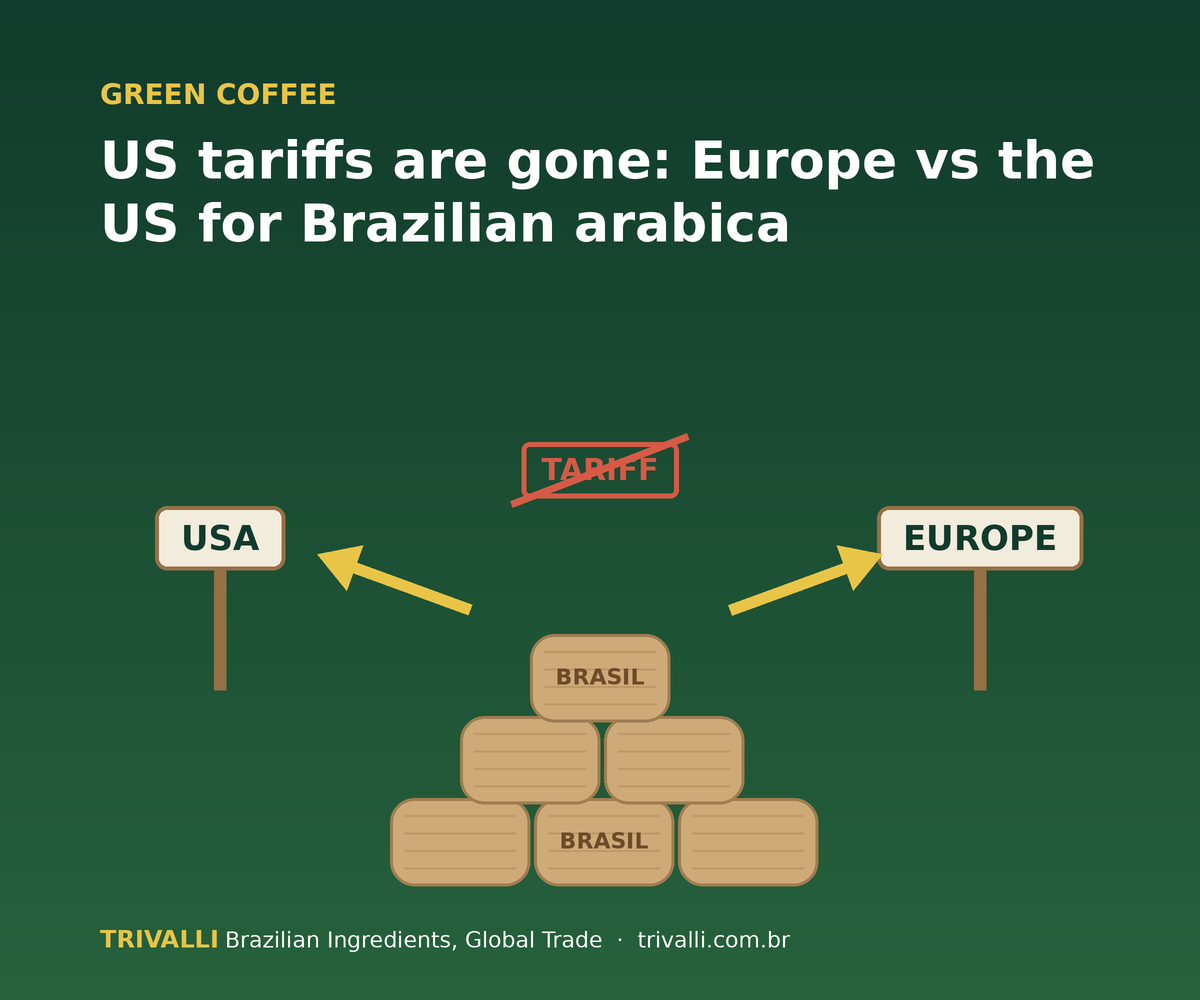
For the EU, traceability documents are becoming part of the offer because of the deforestation regulation. Ask for them early.
Trivalli sends specifications and samples against a clear checklist. Tell us what you roast or trade and we will match the offer.